Tribal and village India
One in twelve people in India belongs to a Scheduled Tribe, the legal term for India’s indigenous peoples.
Unreached share, by group
“Unreached,” as Joshua Project defines it: 2% or fewer evangelical and 5% or fewer Christian. Each row counts people groups, not people.
Who the Adivasi are
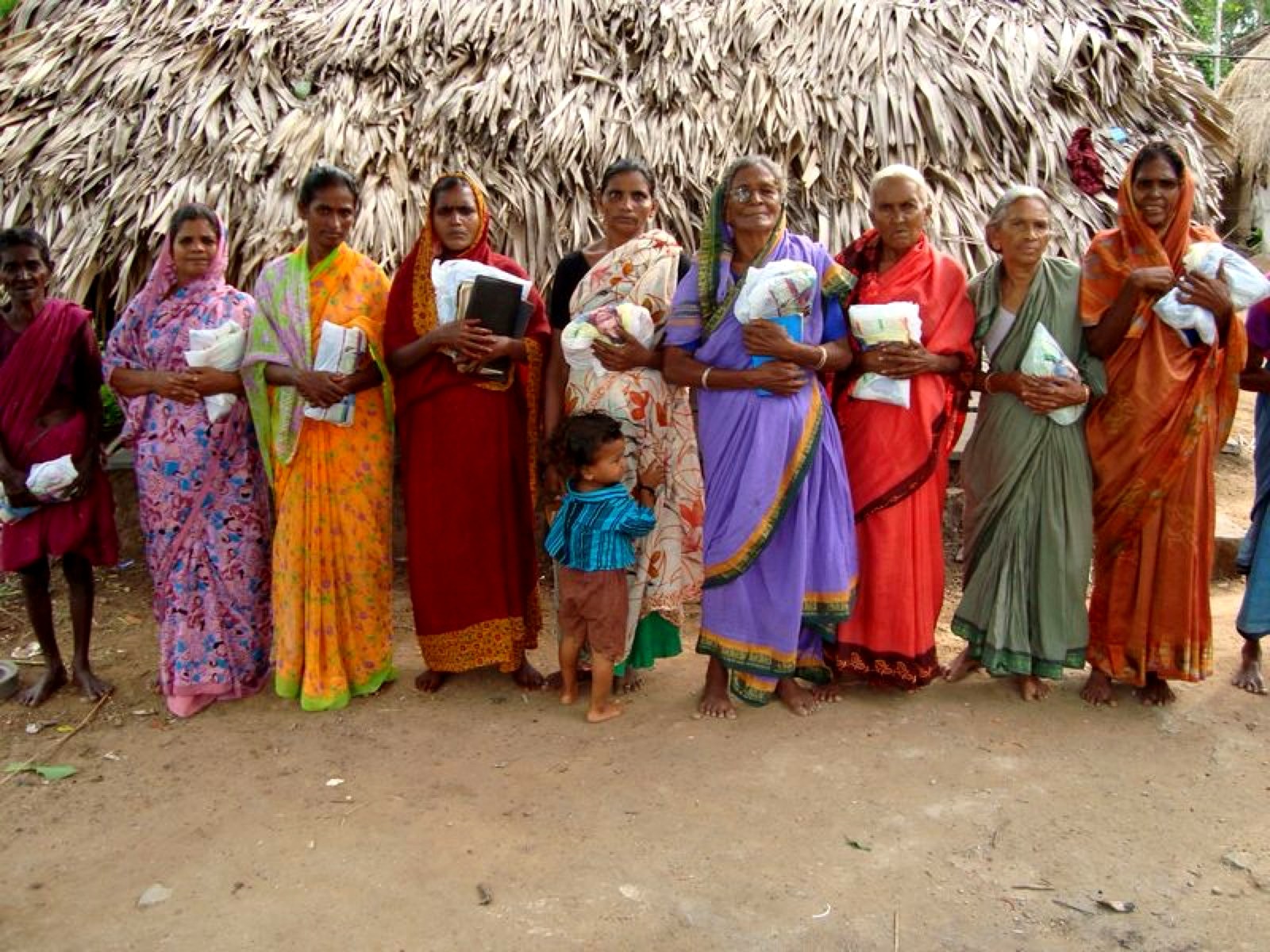
Most live in villages in the hills and forests, far from main roads.
104.5 million
Scheduled Tribe population
8.6% of India, at the 2011 census.
Ministry of Tribal Affairs (Census 2011), accessed 2026 (opens in a new tab)705
Groups officially listed as Scheduled Tribes
Listed at the 2011 census.
Office of the Registrar General, “Scheduled Tribes in India: As revealed in Census 2011” (May 3, 2013), accessed 2026 (opens in a new tab)75
Groups listed as most vulnerable
In 18 states and the Andaman and Nicobar Islands.
Ministry of Tribal Affairs, PM-JANMAN, accessed 2026 (opens in a new tab)90%
Of Scheduled Tribes live in villages
At the 2011 census.
Office of the Registrar General, “Scheduled Tribes in India: As revealed in Census 2011”, accessed 2026 (opens in a new tab)
Faith and Scripture
Christian share and Bible access.
9.2%
Of Scheduled Tribes are Christian
Against 2.0% for India overall.
Joshua Project, India caste and class summary, 2026 (opens in a new tab)120 of 210
Languages without a complete Bible
Our count from Joshua Project’s table.
Joshua Project, India language table, 2026 (opens in a new tab)
Villages
India has more than half a million villages.
597,608
Inhabited villages
Counted at the 2011 census.
Census of India 2011, Table A-01 (Office of the Registrar General), accessed 2026 (opens in a new tab)68.9%
Of India was rural in 2011
The last actual count.
Census of India 2011, Table A-01 (Office of the Registrar General), accessed 2026 (opens in a new tab)63,000+
Tribal villages in a national development program
The government’s five-year DA-JGUA program.
Ministry of Tribal Affairs, DA-JGUA operational guidelines, October 2024, accessed 2026 (opens in a new tab)77%
Of tribal villages have no market
From Antyodaya Mission data.
Ministry of Tribal Affairs, DA-JGUA operational guidelines, October 2024, accessed 2026 (opens in a new tab)
Andhra Pradesh
One of the states where the ministry’s work is documented.
5.92 million
Scheduled Tribe population, 2011
7.0% of the state before Telangana split off.
Census of India 2011, Table A-11 Appendix, Andhra Pradesh (Office of the Registrar General), accessed 2026 (opens in a new tab)2.41 million
Sugalis, the largest tribe
Counted with Lambadis and Banjara.
Census of India 2011, Table A-11 Appendix, Andhra Pradesh, accessed 2026 (opens in a new tab)88.4%
Of the state’s Scheduled Tribes live in villages
5,232,129 of 5,918,073, in 2011.
Census of India 2011, Table A-11 Appendix, Andhra Pradesh, accessed 2026 (opens in a new tab)1.34%
Christian
In the undivided state, at the 2011 census.
Census of India 2011, Table C-01 (Office of the Registrar General), accessed 2026 (opens in a new tab)
Eight tribes of Andhra Pradesh
Official entries from the Census of India 2011, Table A-11 Appendix (opens in a new tab) for the undivided state.
Sugali (Lambadi, Banjara)
Rayalaseema and inland districts2,407,637 people.
Koya
The Godavari valley590,739 people.
Yenadi (Yanadi)
Nellore and the southern coast537,808 people.
Yerukula
Guntur, Anantapur, Krishna and Prakasam519,337 people.
Konda Dora
Eastern Ghats of Visakhapatnam and Vizianagaram211,089 people.
Savara (Sora)
Srikakulam and Vizianagaram hills139,424 people.
Chenchu
The Nallamala forest64,227 people. Officially listed as most vulnerable.
Gadaba
Eastern Ghats of Vizianagaram and Visakhapatnam38,081 people.
What Christians in India face
Sources
- Joshua Project (opens in a new tab)
- Joshua Project — definitions (opens in a new tab)
- Joshua Project — South Asian Peoples affinity bloc (opens in a new tab)
- Joshua Project — Andhra Pradesh (opens in a new tab)
- Census of India 2011, Table A-01 (opens in a new tab)
- Census of India 2011, Table A-11 Appendix (Andhra Pradesh) (opens in a new tab)
- Census of India 2011, Table C-01 (opens in a new tab)
- Office of the Registrar General — Scheduled Tribes in India, Census 2011 (opens in a new tab)
- Ministry of Tribal Affairs, Government of India (opens in a new tab)
- Ministry of Tribal Affairs — DA-JGUA operational guidelines (opens in a new tab)